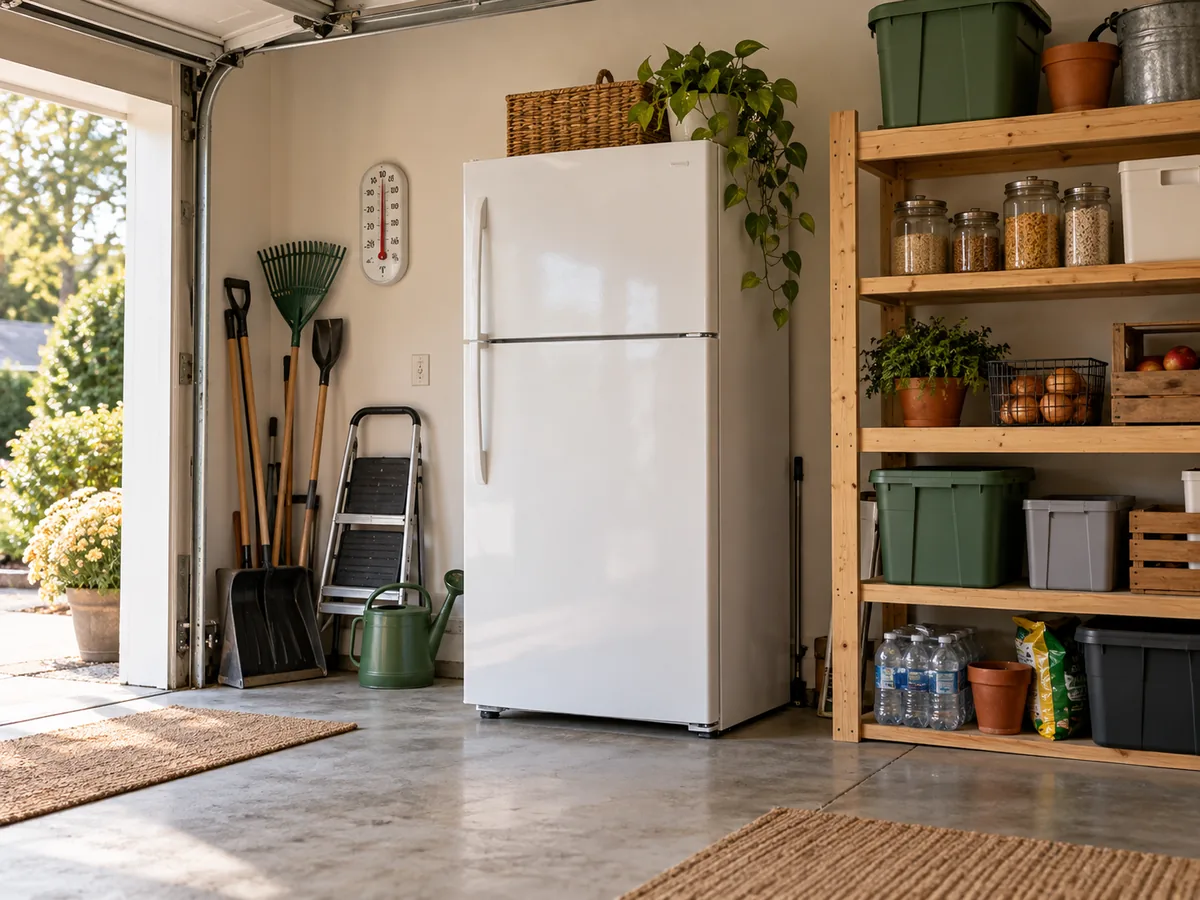
The short answer: A garage refrigerator is a model-and-climate question. Its age alone is not enough; operating-temperature limits, door use, contents, condition, and cycling all affect the result.
Before you start
Check the situation in front of you
Useful home guidance begins with the exact space, model, label, and routine you have. Make these checks before turning a general idea into a household habit.
- Find the model number and official manual.
- Observe the coldest and hottest conditions in the garage.
- Use an appliance thermometer to verify food-safe refrigerator temperature.
Try this at home
A practical route, one step at a time
Move through the sequence in order. Keep notes on what you observe, and change only one variable at a time when you want to understand the result.
- 1
Confirm the allowed environment
Read the installation section for ambient temperature and clearances. A refrigerator designed for conditioned space may not perform normally in a hot or near-freezing garage.
- 2
Define the job
Write what the second unit stores and how often it is opened. A nearly empty convenience fridge and seasonal overflow solve different problems and deserve different comparisons.
- 3
Check condition and setup
Inspect accessible door gaskets, ventilation clearance, level, and dust according to the manual. Do not remove panels or attempt electrical or refrigerant work.
- 4
Measure rather than guess
A suitable plug-in meter can capture cycling over several representative days if the refrigerator uses a compatible plug and the meter is rated for the load. Label the weather and observation period.
- 5
Compare realistic options
Consider keeping it, using it only for a defined season if the manual allows, consolidating contents, or replacing it when another need already justifies a purchase. Include inconvenience and food safety, not only kWh.
Make the result repeatable
Use what you noticed, not a perfect-looking setup
Begin with confirm the allowed environment, because that establishes the condition you are actually working with. Then move through define the job, check condition and setup, measure rather than guess. Those middle checks turn “check the exact model, garage temperatures, actual need, and measured energy use before deciding what the appliance costs you.” from a general idea into a sequence you can evaluate in your own home.
Give the change enough time to reveal a pattern, but do not keep adjusting several things at once. Write down the date, the room or device, the exact setting or arrangement, and what happened next. For equipment questions, add the model number and manual page. For room questions, add weather, time of day, and who was using the space. A small record is more dependable than memory after the next bill, load, or season arrives.
Finish with compare realistic options. If the result is useful, keep the smallest version that solves the problem and add it to the household notes. If it is inconvenient, inconclusive, or conflicts with an instruction, restore the starting condition. A reversible trial is still useful when it tells you which explanation or purchase does not fit. Keep the record with the matching bill, manual, room note, or shopping question so the next comparison begins with context instead of a fresh guess.
Good to know
Conditions, limits, and the point to stop
Keep refrigerated food at 40°F or below and follow USDA guidance during outages. If the appliance cannot hold safe temperature, has damaged wiring, leaks, overheats, or trips protection, stop and seek qualified help.
Takeaway
Keep these four points
- Model manual found
- Garage temperature range observed
- Interior temperature verified
- Energy measured over representative days
Sources and review
Where the factual guidance comes from
- Virginia Cooperative Extension — Estimating Appliance and Home Electronic Energy UseChecked October 14, 2026
- USDA Food Safety and Inspection Service — Refrigeration & Food SafetyChecked October 14, 2026
- U.S. Department of Energy — Energy Saver Guide (2022)Checked October 14, 2026
Read our Editorial Standards or report a correction.