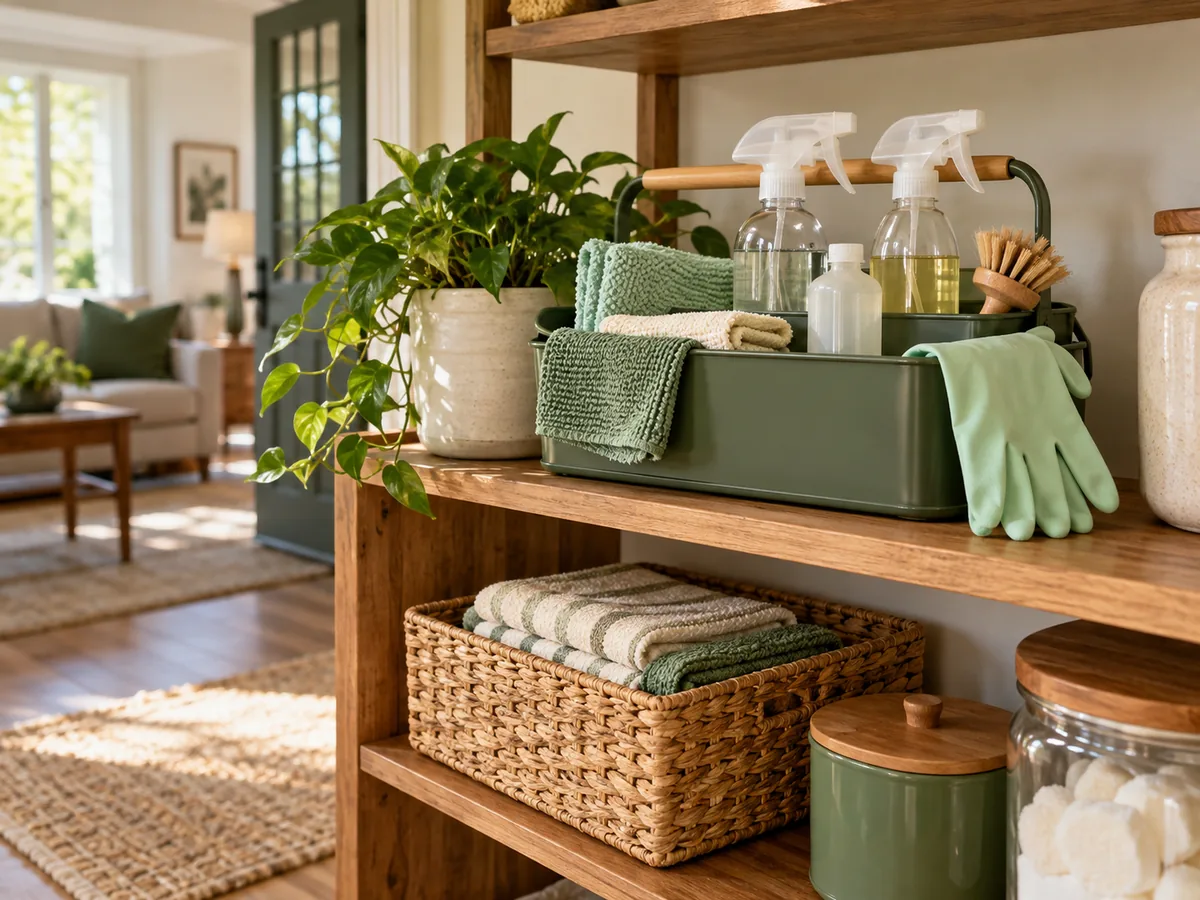
The short answer: Start with tools, then add only the labeled product each surface actually needs. Store the kit where the task begins, not where there happens to be an empty shelf.
Before you start
Check the situation in front of you
Useful home guidance begins with the exact space, model, label, and routine you have. Make these checks before turning a general idea into a household habit.
- List the surfaces in each room, including finishes that can scratch or discolor.
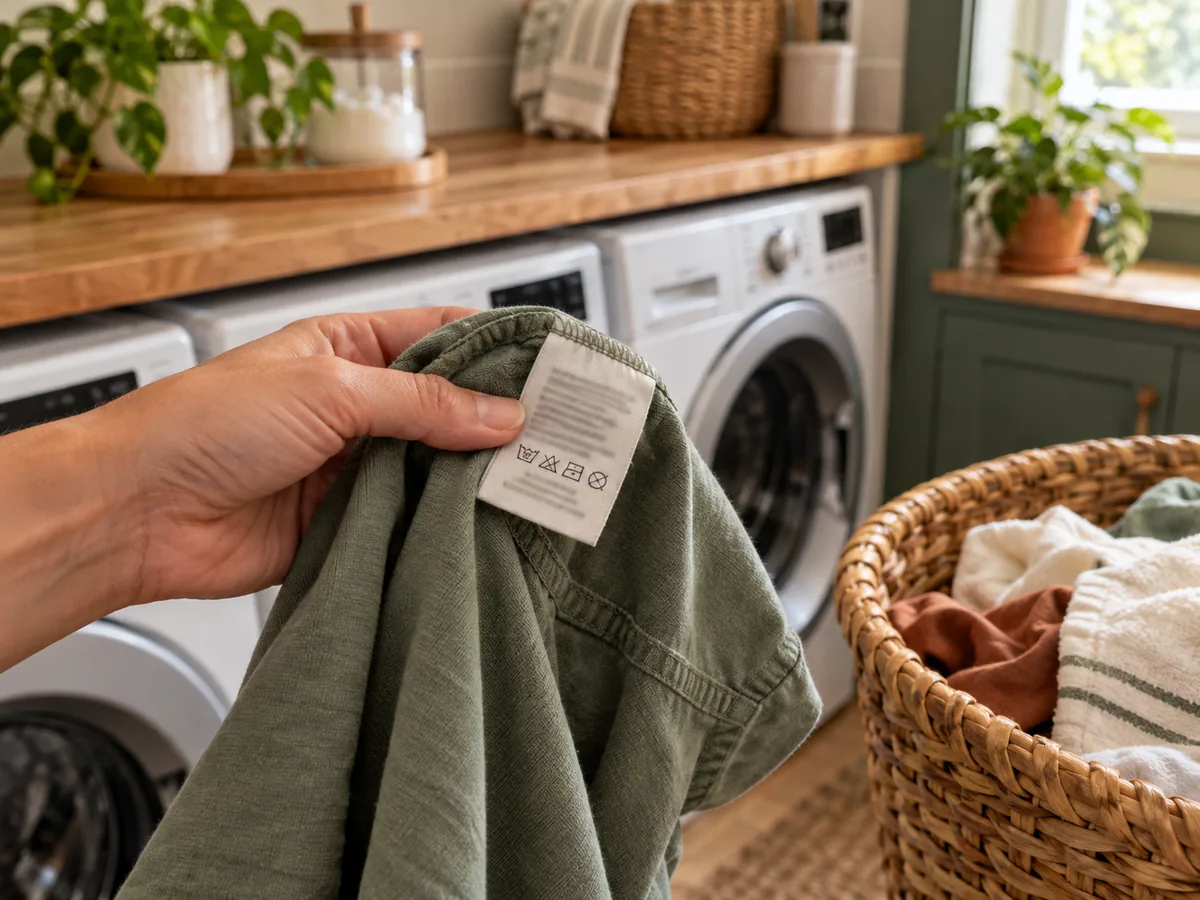
- Read every product and appliance-care label.
- Choose storage that children and pets cannot access.
Try this at home
A practical route, one step at a time
Move through the sequence in order. Keep notes on what you observe, and change only one variable at a time when you want to understand the result.
- 1
Group by action
A soft cloth, non-scratch sponge, small brush, squeegee, and gloves cover many jobs. Tools are easier to audit than a collection of overlapping sprays.
- 2
Match products to surfaces
Use the maker’s care guidance for stone, wood, appliance finishes, flooring, and upholstery. A product described as multipurpose still has exclusions on its label.
- 3
Split wet and dry tasks
Keep dusting and vacuum attachments away from damp cloths and leaking bottles. A washable pouch or divided caddy prevents one spill from contaminating the entire kit.
- 4
Place a kit near the work
A small bathroom set and a separate kitchen set may be more useful than one heavy bucket carried through the house. Duplicate simple tools before duplicating specialty chemicals.
- 5
Schedule a five-minute reset
Rinse and dry tools, close containers, discard damaged sponges, and return every item. A reset is part of the task, not an optional cleanup after cleaning.
Use the guide
A practical result you can keep
| Task | Useful tool | Important limit |
|---|---|---|
| Loose dust | Microfiber cloth or vacuum attachment | Check delicate finishes |
| Small crevices | Soft detail brush | Do not scratch seals |
| Wet wiping | Color-coded washable cloth | Use the labeled surface product |
| Floor debris | Broom or vacuum head | Match the floor type |
Make the result repeatable
Use what you noticed, not a perfect-looking setup
Begin with group by action, because that establishes the condition you are actually working with. Then move through match products to surfaces, split wet and dry tasks, place a kit near the work. Those middle checks turn “build a small, task-based kit that respects surface instructions and keeps incompatible products apart.” from a general idea into a sequence you can evaluate in your own home.
Give the change enough time to reveal a pattern, but do not keep adjusting several things at once. Write down the date, the room or device, the exact setting or arrangement, and what happened next. For equipment questions, add the model number and manual page. For room questions, add weather, time of day, and who was using the space. A small record is more dependable than memory after the next bill, load, or season arrives.
Finish with schedule a five-minute reset. If the result is useful, keep the smallest version that solves the problem and add it to the household notes. If it is inconvenient, inconclusive, or conflicts with an instruction, restore the starting condition. A reversible trial is still useful when it tells you which explanation or purchase does not fit. Keep the record with the matching bill, manual, room note, or shopping question so the next comparison begins with context instead of a fresh guess.
Good to know
Conditions, limits, and the point to stop
Never mix products or transfer them to food containers. Ventilate as directed, follow label contact times, and stop if a surface changes color or texture. Mold, sewage, lead dust, and other hazards need situation-specific guidance.
Takeaway
Keep these four points
- Every tool has a defined task
- Surface instructions remain easy to find
- Products stay in original containers
- The kit is reset after use
Sources and review
Where the factual guidance comes from
This article’s organizing method, checklist, and household examples are original editorial material. Model-specific and safety-critical decisions should be checked against the relevant manufacturer instructions and local requirements.
Read our Editorial Standards or report a correction.