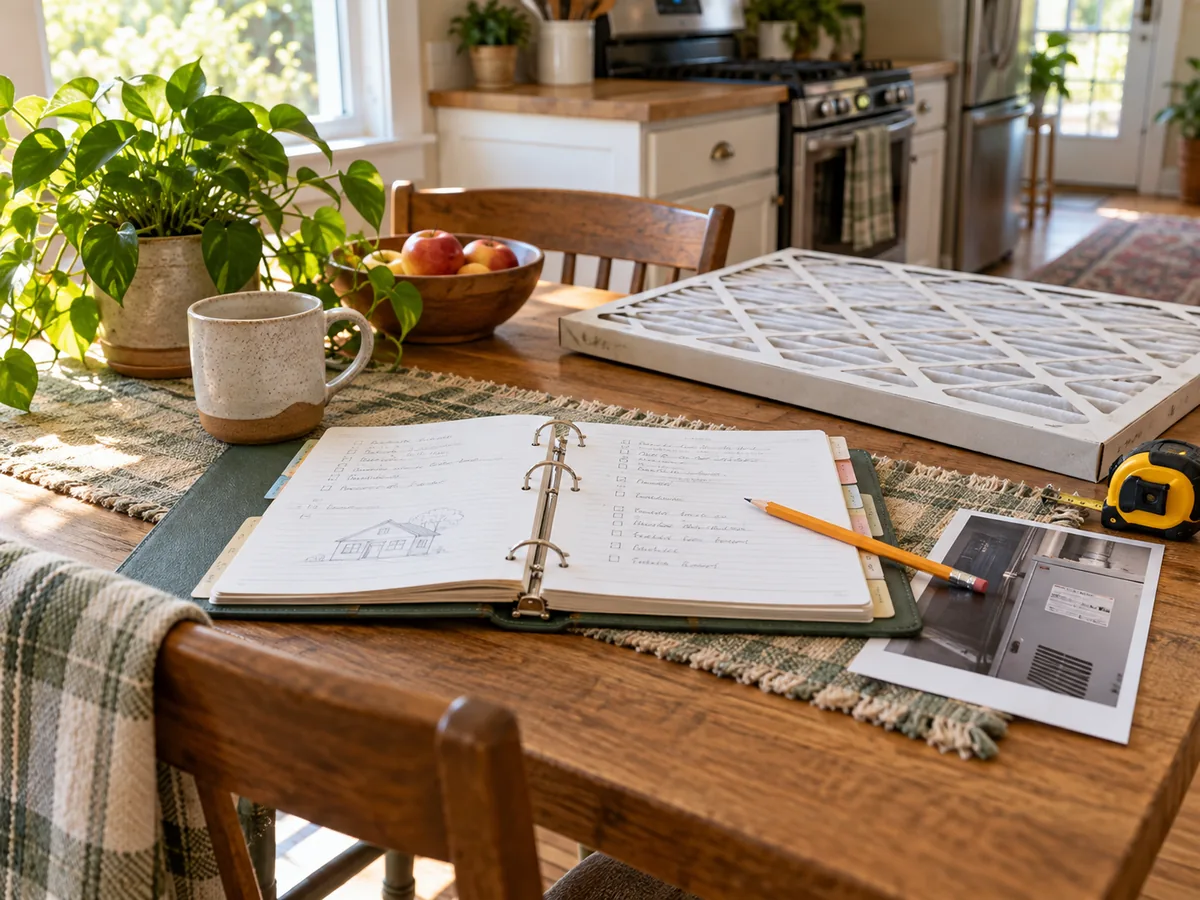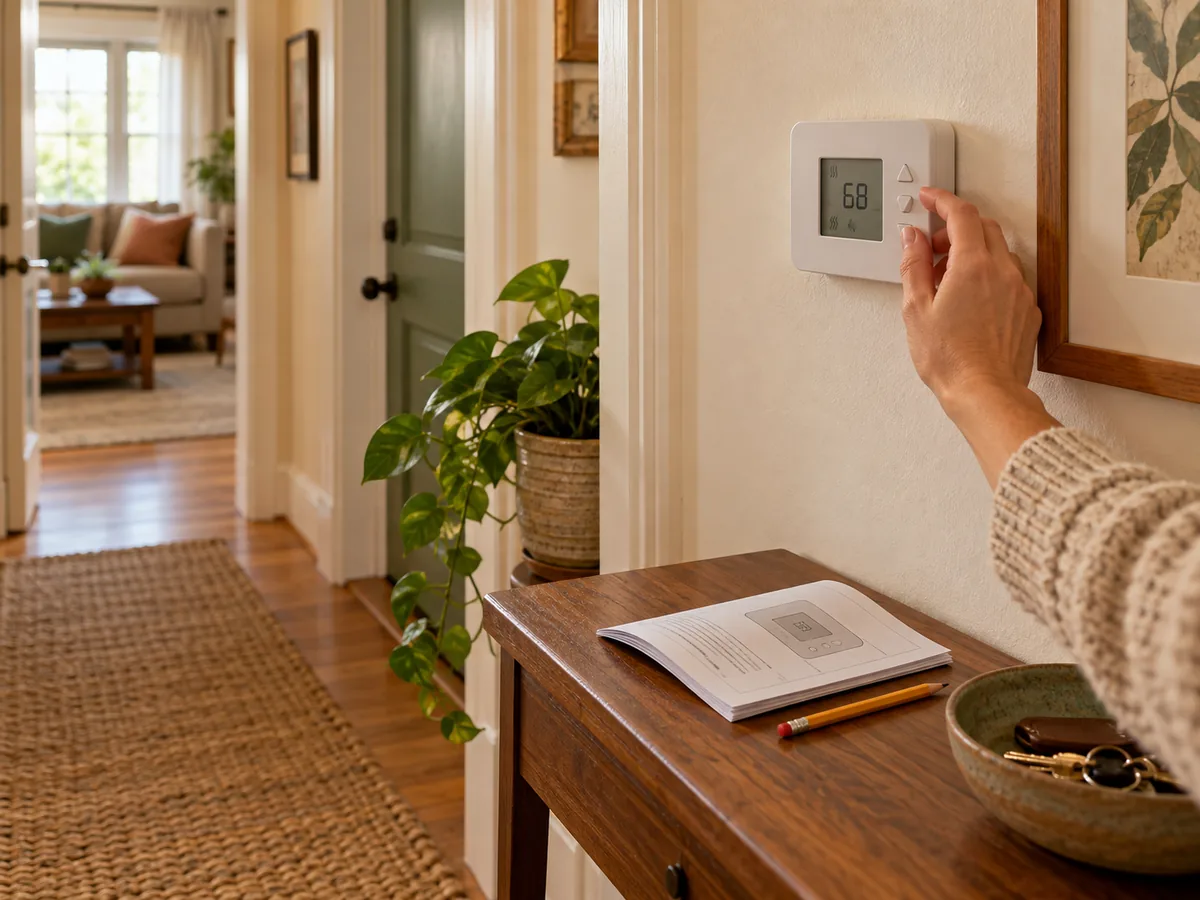
The short answer: A schedule is only useful when it matches the equipment and household. Find the model, system type, active mode, and special heat-pump guidance before changing setpoints.
Before you start
Check the situation in front of you
Useful home guidance begins with the exact space, model, label, and routine you have. Make these checks before turning a general idea into a household habit.
- Record the current schedule and mode.
- Identify whether the system is a heat pump, furnace, boiler, or another configuration.
- Find the thermostat and equipment manuals.
Try this at home
A practical route, one step at a time
Move through the sequence in order. Keep notes on what you observe, and change only one variable at a time when you want to understand the result.
- 1
Name every active mode
Heat, cool, auto, emergency heat, fan auto, fan on, away, eco, hold, and recovery labels do not mean exactly the same thing on every thermostat. Decode the ones currently displayed.
- 2
Map household periods
Write when people wake, leave, return, sleep, and need particular rooms. A schedule built from real occupancy is easier to evaluate than a copied four-period template.
- 3
Check heat-pump instructions
Some heat-pump systems use supplemental electric resistance heat. Large or poorly configured recovery changes can behave differently, so follow the equipment and thermostat guidance rather than a universal setback rule.
- 4
Change one period
Adjust a single setpoint or time, note the date, and observe comfort and system response for several comparable days. Avoid changing the schedule, fan, and mode at once.
- 5
Preserve manual control
Learn how temporary hold, permanent hold, resume schedule, and emergency modes work. Everyone in the home should know how to return the system to a safe ordinary setting.
Make the result repeatable
Use what you noticed, not a perfect-looking setup
Begin with name every active mode, because that establishes the condition you are actually working with. Then move through map household periods, check heat-pump instructions, change one period. Those middle checks turn “identify the thermostat and hvac system, understand modes and recovery behavior, then make small documented changes.” from a general idea into a sequence you can evaluate in your own home.
Give the change enough time to reveal a pattern, but do not keep adjusting several things at once. Write down the date, the room or device, the exact setting or arrangement, and what happened next. For equipment questions, add the model number and manual page. For room questions, add weather, time of day, and who was using the space. A small record is more dependable than memory after the next bill, load, or season arrives.
Finish with preserve manual control. If the result is useful, keep the smallest version that solves the problem and add it to the household notes. If it is inconvenient, inconclusive, or conflicts with an instruction, restore the starting condition. A reversible trial is still useful when it tells you which explanation or purchase does not fit. Keep the record with the matching bill, manual, room note, or shopping question so the next comparison begins with context instead of a fresh guess.
Good to know
Conditions, limits, and the point to stop
Extreme weather, infants, older adults, health conditions, pets, pipes, humidity, and building type can set stricter comfort and safety needs. Service, wiring, and equipment configuration belong with qualified professionals.
Takeaway
Keep these four points
- System type identified
- Current schedule saved
- Heat-pump guidance checked
- One change observed before the next
Sources and review
Where the factual guidance comes from
- ENERGY STAR — Smart Thermostats Key Product CriteriaChecked October 14, 2026
- U.S. Department of Energy — Energy Saver Guide (2022)Checked October 14, 2026
Read our Editorial Standards or report a correction.