The short answer: The right control follows the trigger you can predict. Choose clock time for a stable schedule and sensing for irregular movement, then verify wiring, load, field of view, and location rating.
Before you start
Check the situation in front of you
Useful home guidance begins with the exact space, model, label, and routine you have. Make these checks before turning a general idea into a household habit.
- Define the light or appliance and its normal manual control.
- Decide whether the trigger is time, darkness, occupancy, or motion.
- Check outdoor, wet-location, and load compatibility.
Try this at home
A practical route, one step at a time
Move through the sequence in order. Keep notes on what you observe, and change only one variable at a time when you want to understand the result.
- 1
Use timers for repeatable windows
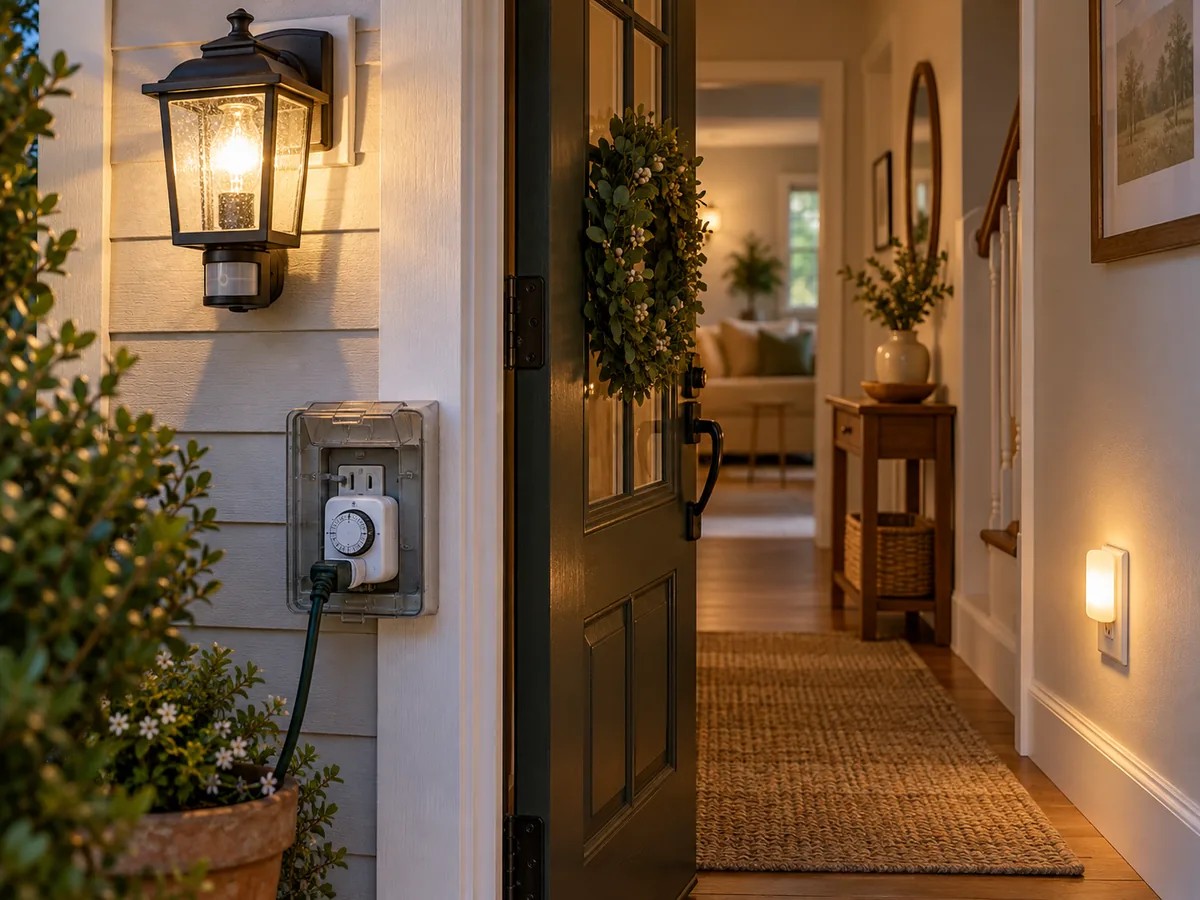
A plug-in or built-in timer suits a porch lamp or other compatible load that should operate at known times. Check daylight-saving behavior, battery backup, and what happens after an outage.
- 2
Use sensors for irregular movement
A motion or occupancy sensor can respond when someone enters a space. Field of view, delay, pets, doors, heat sources, and passing traffic influence performance.
- 3
Distinguish light sensing
Photocells respond to ambient light rather than a person. They can pair with a timer or motion function, but confirm the logic instead of assuming all three are included.
- 4
Preserve an override
A clear manual-on and manual-off method matters for guests, cleaning, unusual schedules, and troubleshooting. Record the reset sequence where household members can find it.
- 5
Test the real boundary
Walk the approach, stand still, open adjacent doors, and observe false triggers. Adjust only user controls described in the manual; move or replace a poorly matched device rather than masking safety areas.
Make the result repeatable
Use what you noticed, not a perfect-looking setup
Begin with use timers for repeatable windows, because that establishes the condition you are actually working with. Then move through use sensors for irregular movement, distinguish light sensing, preserve an override. Those middle checks turn “use a timer for predictable periods and an occupancy or motion sensor for activity-dependent light, then check location and manual override.” from a general idea into a sequence you can evaluate in your own home.
Give the change enough time to reveal a pattern, but do not keep adjusting several things at once. Write down the date, the room or device, the exact setting or arrangement, and what happened next. For equipment questions, add the model number and manual page. For room questions, add weather, time of day, and who was using the space. A small record is more dependable than memory after the next bill, load, or season arrives.
Finish with test the real boundary. If the result is useful, keep the smallest version that solves the problem and add it to the household notes. If it is inconvenient, inconclusive, or conflicts with an instruction, restore the starting condition. A reversible trial is still useful when it tells you which explanation or purchase does not fit. Keep the record with the matching bill, manual, room note, or shopping question so the next comparison begins with context instead of a fresh guess.
Good to know
Conditions, limits, and the point to stop
Use listed devices within their load and location ratings. Plug-in controls are not a reason to run cords through doors or across paths. Fixed-wiring installation belongs with a qualified professional.
Takeaway
Keep these four points
- Trigger type chosen
- Location rating verified
- Manual override understood
- Detection boundary tested
Sources and review
Where the factual guidance comes from
This article’s organizing method, checklist, and household examples are original editorial material. Model-specific and safety-critical decisions should be checked against the relevant manufacturer instructions and local requirements.
Read our Editorial Standards or report a correction.